

A Complete Guide to Custom Cabinetry
Everything you need to make an informed choice for your home.
Choosing custom cabinetry is about much more than deciding on a door style or colour. The wood or material you choose, its natural characteristics, the finish, construction methods, hardware and design all influence how your cabinetry will look, function and perform for years to come.
With so many choices available, understanding those differences can help you make decisions with confidence. Why does hickory have so much natural variation? How does maple differ from oak? What should you expect from real wood as the seasons change? What makes one type of drawer slide or hinge different from another? And which choices make the most sense for the way you use your home?
At Woodmaster, we believe part of creating cabinetry you'll love is helping you understand exactly what you're choosing and why. We've been designing and crafting custom cabinetry in our Red Deer workshop for more than three decades, and that experience has taught us that there isn't one material, finish or design that's right for everyone. The right choice is the one that suits your home, your lifestyle, your expectations and your taste.
That's why we've created this guide.
Explore the materials we work with, discover the natural characteristics that make every species of wood different, learn how your cabinetry is constructed and finished, compare your options, and find practical advice for caring for your cabinets long after they're installed.
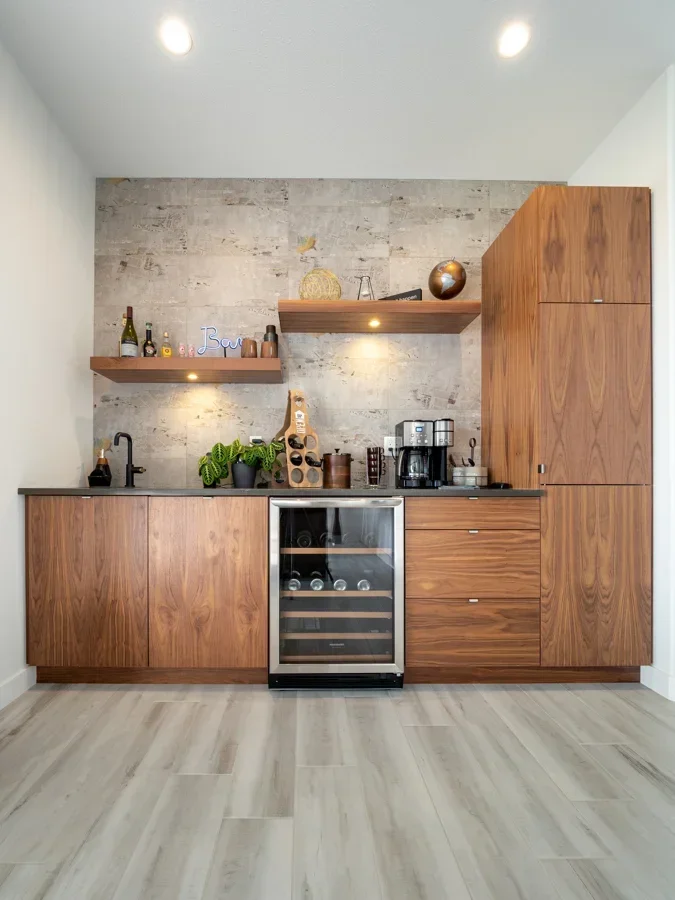
“The more you know about your cabinetry, the better equipped you’ll be to choose something you’ll enjoy living with for many years to come.”
Wood & Materials
It Starts With What Your Cabinets Are Made Of
The material you choose is one of the most important decisions you'll make when designing custom cabinetry. It influences not only how your cabinets look today, but also their character, durability, finish and how they will change over time.
Natural woods each have their own personality. Some have a quiet, consistent grain, while others are defined by dramatic variations in colour and pattern. The light and dark areas you see in hickory, the subtle grain of maple, or the distinctive character of oak aren't simply decorative differences—they are natural characteristics of the material itself.
And natural wood isn't the right choice for every project. Today's cabinetry can incorporate a range of carefully selected materials, each offering different advantages in appearance, stability, performance and design flexibility. Woodmaster's existing cabinetry reflects this breadth, ranging from stained maple and oak to wood veneers and contemporary painted finishes.
There Is No Single "Best" Material
The better question is: Which material is right for you?
Your choice should reflect more than a photograph you've seen or a colour sample you like. Consider how much natural variation you want to see, the style you're trying to create, how the space will be used, the finish you prefer and what you expect your cabinetry to look like as it ages.
If you love the unmistakable character of natural wood, variation may be exactly what makes your cabinetry beautiful to you. If you prefer greater consistency from one door to the next, another species or material may be a better fit.
Neither choice is better simply because it is different.
Understanding those differences before you choose is what matters.
See It. Understand It. Then Choose It.
Small samples are helpful, but natural materials can never be completely represented by a single piece of wood. Grain, colour, mineral characteristics and other variations can occur from one board—and even one part of a board—to another.
That's part of what makes genuine wood cabinetry unique.
Our goal is to help you understand what you can reasonably expect from the material you're considering before your cabinetry is built. We'll explain its appearance, natural characteristics, advantages, considerations, finishing possibilities and how it is likely to perform in your home.
That way, you're not simply choosing a cabinet that looks good on a sample.
You're choosing a material you understand and will enjoy living with.
Explore Wood Species & Cabinet Materials
Discover the characteristics, advantages and considerations of the woods and materials available for your cabinetry, and learn which may be the best fit for your home, your style and the way you live.
Cabinet Finishes
The Finish Brings Your Cabinetry to Life
Choosing the material is only part of creating cabinetry that feels right in your home. The finish you select determines how much of the wood's natural character is revealed, how colour interacts with the grain, and ultimately how your cabinetry works with the rest of your space.
A clear or natural finish can allow the colour and grain of the wood to take centre stage. Stains can enhance, soften or dramatically change its appearance while still allowing the character underneath to remain visible. Painted finishes offer an entirely different look, providing greater colour consistency and opening the door to everything from timeless neutrals to bold statement cabinetry.
But choosing a finish isn't simply about finding a colour you like.
The same stain can look different from one wood species to another because each wood has its own natural colour, grain and characteristics. Even within the same species, natural variation means that finished pieces won't necessarily look identical. That's part of the beauty of working with genuine wood—and something worth understanding before making your choice.
Your finish also needs to suit the way you want your cabinetry to feel within the room. Do you want the warmth and character of the wood to be immediately noticeable? A clean and understated backdrop? A rich, traditional appearance? Or perhaps a painted finish that complements other colours and materials throughout your home?
There isn't one finish that's right for every project.
The right finish is the one that works with your chosen material, your design, your home and the way you want the finished space to feel.
Woodmaster's designers can help you explore those combinations, compare samples and understand how different finishes interact with the materials you're considering—so you're making your selection based on more than a small colour sample alone.
How Your Cabinets Are Built
Quality Is More Than What You Can See
Beautiful cabinetry begins with good design and carefully chosen materials, but what happens behind the doors and drawers matters just as much as what you see on the outside.
The way cabinets are constructed influences how they feel when you use them, how well doors and drawers operate, how securely everything fits together, and how the cabinetry performs through years of everyday use.
From the cabinet boxes themselves to doors, drawer construction, joinery and hardware, every component has a job to do. Hinges need to keep doors properly aligned. Drawer slides need to operate smoothly while supporting the loads placed on them. Connections and fastening methods need to remain secure. And all of those individual components need to work together as a complete cabinet.
Installation is equally important. Even well-built cabinetry needs to be carefully fitted, levelled, aligned and adjusted within the home. Walls and floors aren't always perfectly straight or square, which makes the experience and attention of the installer an important part of the finished result.
This is why we believe quality cabinetry shouldn't be judged by appearance alone.
Understanding what's behind the door can help you recognize meaningful differences in cabinet construction and ask better questions when making your decision.
We'll take you inside the cabinetry to explain how cabinet boxes, doors, drawers, hinges, slides, joinery and installation all contribute to the finished product—and why Woodmaster makes the construction choices we do.
Good cabinetry should look beautiful. Great cabinetry should continue working beautifully, too.
Cabinet Design
Designed Around the Way You Live
Good cabinet design isn't simply about filling a room with cabinets. It's about understanding the space, how you use it, what you need to store, and how everything should work together once the project is complete.
A kitchen used by a busy family may need very different storage and workflow than one designed primarily for entertaining. An island might become a place for food preparation, casual meals, homework and conversation. A pantry needs to make everyday items easy to find and reach. In a bathroom, laundry room, home bar or built-in living space, the priorities change again.
That's where thoughtful custom design makes a difference.
Cabinet dimensions, drawer placement, storage solutions, appliance locations, working heights, clearances and traffic flow can all influence how comfortable and practical a room feels. Even small design decisions can make everyday tasks noticeably easier.
But function shouldn't come at the expense of appearance.
Proportion, symmetry, door styles, materials, finishes and architectural details all contribute to how cabinetry relates to the room around it. The goal is to bring those practical and visual considerations together so the finished space feels intentional rather than simply assembled.
At Woodmaster, the design process begins by listening. Understanding what works in your current space, what doesn't, what you want to accomplish and how you live helps us design cabinetry around you, rather than asking you to adapt to a predetermined solution.
Whether you're planning a kitchen, bathroom, laundry room, home bar, built-in cabinetry or another custom space, good design starts with the same question:
How can we make this space work better for you?
Understanding Natural Wood
Natural Character Is Part of What Makes Wood Beautiful
No two trees grow exactly alike, and no two pieces of natural wood are identical. Differences in grain, colour, figuring and other characteristics aren't imperfections—they are part of what gives genuine wood cabinetry its warmth, depth and individuality.
Depending on the species you choose, those differences can be subtle or quite dramatic. Heartwood and sapwood may create contrasting colours. Mineral streaks, knots and changes in grain can appear throughout the cabinetry. Even neighbouring doors made from the same species may have noticeably different characteristics.
Wood also continues to respond to its environment after it becomes part of your home. Changes in temperature and indoor humidity can cause natural expansion and contraction throughout the seasons. Exposure to light and the passage of time can also gradually influence colour, with some species changing more noticeably than others.
Understanding these characteristics is particularly important when choosing custom cabinetry. A small sample can show you the general colour, grain and finish, but it cannot represent every natural variation that may appear across an entire kitchen.
For some homeowners, that individuality is exactly what makes natural wood so appealing. Others prefer greater consistency from one cabinet to the next and may be happier with a different species, finish or material.
Neither preference is right or wrong.
What matters is understanding what you're choosing—and choosing it because you appreciate the characteristics that come with it.
The more you understand how natural wood looks, behaves and changes over time, the easier it becomes to select cabinetry you'll continue to appreciate long after installation.
Compare Your Options
The Best Choice Is the One That Fits You
When choosing custom cabinetry, you'll often find yourself comparing two good options rather than one right and one wrong choice.
Hickory or maple? Natural wood or painted cabinetry? One finish compared with another? Different construction methods, hardware or storage solutions?
The answer depends on what matters most to you.
A material with dramatic natural variation may be perfect for someone who wants every piece of wood to show its individual character, while another homeowner may prefer greater consistency. A painted finish can create a clean, uniform appearance, while stained wood allows the grain and natural characteristics underneath to remain part of the design.
The same principle applies beyond appearance. Durability, maintenance, how a material ages, the way a finish performs, construction details and how you plan to use the space can all influence which option makes the most sense.
That's why meaningful comparisons shouldn't simply declare a winner.
We'll help you understand the differences, advantages, considerations and trade-offs between your options so you can decide which characteristics matter most for your cabinetry.
Whether you're comparing wood species, materials, finishes, construction choices or design solutions, the goal is simple:
Not to tell you which option is best—but to help you understand which option is best for you.
Cabinet Care & Ownership
Beautiful Cabinetry Deserves to Be Cared For
Your cabinetry becomes part of everyday life from the moment it is installed. Doors are opened, drawers are used, meals are prepared, spills happen, and the seasons change around it.
Understanding how to care for your cabinets can help preserve their appearance and keep them functioning properly for years to come.
Good cabinet care doesn't need to be complicated. Using appropriate cleaning methods, avoiding excessive moisture, maintaining reasonable indoor humidity levels and addressing spills promptly can all help protect cabinetry and its finish.
Natural wood also responds to changes in its environment. Seasonal expansion and contraction can occur as indoor humidity changes, particularly in Central Alberta's climate. Small adjustments may occasionally be required as cabinetry settles and experiences normal use.
Hardware deserves attention as well. Hinges, drawer slides, handles and other moving components are designed for repeated use, but understanding what is normal—and when something may need adjustment or service—helps keep everything operating as intended.
Just as importantly, cabinetry changes with time. Natural wood may gradually deepen or shift in colour, finishes experience everyday use, and the characteristics that make genuine wood unique remain part of the cabinetry throughout its life.
Knowing what to expect helps distinguish normal aging and natural movement from something that may require attention.
Our care and ownership guidance will help you understand how to clean and protect your cabinetry, manage environmental conditions, maintain hardware and recognize when it's time to contact Woodmaster for advice.
Well-made cabinetry is built to be lived with. Knowing how to care for it helps you enjoy it for many years to come.
Before You Choose
Make Your Decision With Confidence
Custom cabinetry is a significant part of your home. It influences how your kitchen functions, how the space looks and feels, and how you experience it every day. Making the right choices deserves more than selecting a door style and colour from a sample.
Take the time to understand the materials you're considering. Look at the natural characteristics of different wood species. Explore how finishes change their appearance. Learn what goes into the construction of your cabinets and think carefully about how you want your kitchen to work for you.
Most importantly, consider what you want from your cabinetry.
Do you love natural variation or prefer greater consistency? Is long-term durability particularly important for your household? How much storage do you need? How do you cook, gather and move through your kitchen? Which details will make the space more enjoyable to use every day?
Samples, photographs and inspiration are excellent starting points, but they are only part of the process. Seeing materials firsthand and discussing your priorities with an experienced designer can help turn those ideas into choices that work together.
At Woodmaster, we're here to answer your questions, explain your options and help you understand the decisions you're making—not simply tell you what to choose.
Beautiful cabinetry starts with understanding what you're choosing.
When you're ready, bring us your ideas. We'll help you take it from there.