

White Oak Cabinet Doors
Distinctive Grain, Natural Warmth & Enduring Character
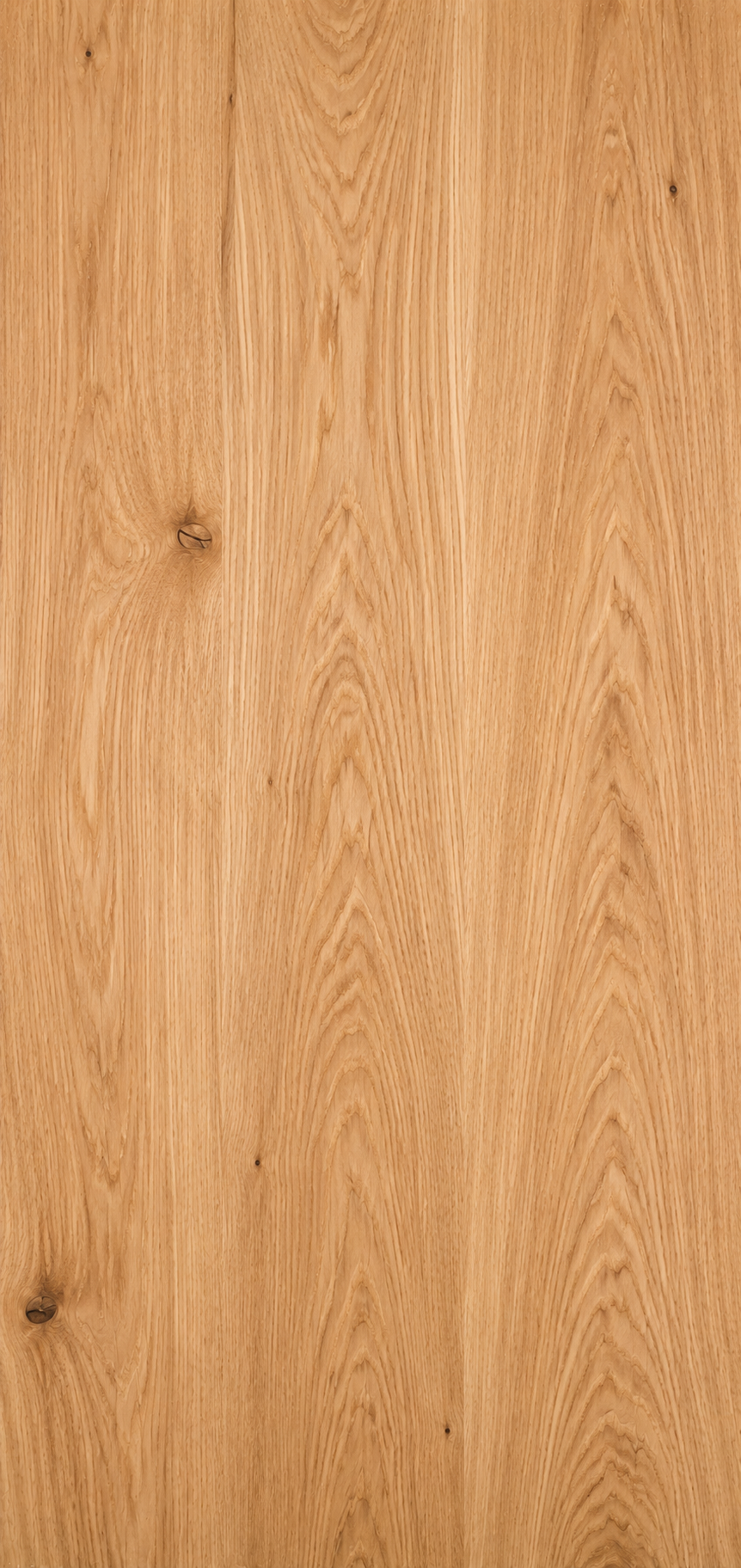
White Oak combines clearly visible wood grain with a warm, relatively balanced natural appearance.
Its colouring typically ranges from light beige and tan through medium brown, often with warm golden or slightly olive undertones. Despite its name, White Oak isn't necessarily pale or “white,” and its natural colour can overlap considerably with Red Oak.
What distinguishes White Oak is the combination of its colour, grain structure and natural character. The grain remains clearly visible without typically producing the dramatic light-to-dark contrast associated with Hickory.
This makes White Oak particularly appealing when you want natural wood to play a noticeable role in the kitchen while maintaining a relatively calm and refined overall appearance.
White Oak doesn't hide the fact that it's natural wood. Its grain and variation are part of what make it desirable.
At Woodmaster, your choice of wood species primarily determines the material and appearance of your cabinet doors and applicable visible wood components. Cabinet-box materials are selected according to the requirements and finish of the project and may include laminated particle board, MDF for certain solid-colour applications, or particle board with real wood veneer.
What Does White Oak Look Like?
White Oak generally ranges from light tan and beige through warm medium-brown tones.
Its grain is prominent and typically relatively straight, although sweeping and cathedral-like patterns can occur depending on how the individual boards are cut.
The wood has a visible texture and grain structure that immediately distinguishes it from finer-grained species such as Hard Maple or Alder.
Individual pieces can also show subtle differences in colour, grain density and natural markings.
And despite the names, White Oak and Red Oak cannot reliably be distinguished simply by looking for “white” versus “red” wood. Their colours can overlap significantly.
If you're choosing White Oak, choose it for the character of the wood—not because you expect every piece to be a particular shade.
How Much Variation Should You Expect?
White Oak provides natural variation, although it is generally more restrained than Hickory.
Across an entire kitchen, you may notice:
lighter and darker tan or brown tones
warm golden or slightly olive undertones
differences in grain direction
straight grain alongside sweeping patterns
naturally occurring streaks or markings
differences in how individual pieces respond to finish
Because White Oak's grain is clearly visible, individual doors will not look identical.
A small sample can demonstrate the general colour, grain and finish, but it cannot show every characteristic that may appear across dozens of doors, drawer fronts and other visible wood components.
For many homeowners, that balance is exactly what makes White Oak appealing: there is enough variation to make the wood visibly natural without the extreme contrast of a species such as Hickory.
Is White Oak Durable?
Yes.
White Oak is a hard, dense hardwood with very good resistance to everyday wear. It has a Janka hardness rating of approximately 1,360 lbf, making it slightly harder than Red Oak and well suited to cabinet doors and other visible wood components.
Its durability is one reason White Oak has historically been used for furniture, flooring, architectural woodworking and other applications where the material needs to withstand regular use.
That doesn't make White Oak immune to damage.
It can still be scratched, dented or affected by impacts, moisture, inappropriate cleaners or unsuitable environmental conditions.
And as with Woodmaster's other wood-species choices, White Oak describes the doors and applicable visible components—not the construction of the cabinet box. Woodmaster's cabinet boxes are consistently constructed from laminated particle board.
How Does White Oak Take Stain?
White Oak accepts a broad range of finishes, making it extremely versatile.
Natural and lighter finishes can emphasize the wood's warm colouring while allowing its grain to remain prominent. Medium and darker stains can substantially transform its appearance while maintaining the underlying texture and movement of the wood.
The grain itself plays an important role in the finished result.
Stain can settle differently within the grain structure, increasing contrast and making certain patterns more noticeable.
This means the same stain applied to White Oak, Hard Maple or Alder can produce distinctly different results.
Always evaluate the wood species and finish together.
If you're considering White Oak, look at actual White Oak samples with the finishes you're interested in rather than relying solely on a stain chart or photograph.
Does White Oak Change Colour Over Time?
Yes.
Like other natural woods, White Oak can gradually change in appearance with age and exposure to light.
Its colouring may become somewhat warmer or more golden over time, although the degree of change depends on the individual wood, finish, light exposure and conditions within the home.
This development is generally gradual and shouldn't be confused with Cherry's much more noticeable tendency to deepen substantially in colour.
It does mean, however, that newly finished White Oak may not perfectly match cabinetry that has been exposed to years of light and everyday living.
Natural wood isn't visually static.
Small changes over time are part of the material's natural development.
What Cabinet Styles Work With White Oak?
White Oak is remarkably versatile.
Its visible grain provides natural texture, while its generally balanced colouring allows it to work with a wide variety of surrounding materials.
With simple door profiles and natural or lighter finishes, White Oak can create a clean, contemporary appearance where the wood grain becomes an intentional design element.
It also works extremely well in transitional kitchens, where natural warmth can be combined with painted cabinetry, stone countertops and other materials.
Warmer or darker finishes and more detailed door profiles can move White Oak toward a more traditional appearance.
White Oak is also particularly effective when used as a contrasting material—for example, on an island surrounded by painted cabinetry.
The wood can be prominent without necessarily dominating the room.
Advantages of White Oak Cabinet Doors
White Oak may be particularly appealing if you value:
Distinctive Natural Grain
Its visible grain provides genuine wood character without requiring extreme colour variation.
Natural Warmth
Tan, beige, golden and medium-brown tones create a warm foundation that works with many kitchen designs.
Durability
White Oak's hardness makes it well suited to cabinet doors that experience regular everyday use.
Finishing Versatility
The wood works with natural treatments as well as a broad range of stains.
Design Flexibility
White Oak can move comfortably between contemporary, transitional and traditional kitchen designs.
Balanced Natural Variation
For homeowners who want visible wood character without Hickory's dramatic contrasts, White Oak can provide an attractive middle ground.
What Should You Know Before Choosing White Oak?
The first thing to understand is that White Oak isn't a uniform beige material.
Individual pieces will vary.
Grain patterns change from one door to another. Colour can move between lighter and darker tones. Natural markings may occur, and the finish can emphasize characteristics that were less obvious in unfinished wood.
If you have seen a photograph of a White Oak kitchen you love, don't assume selecting White Oak automatically recreates that exact appearance.
The way the lumber was cut, the particular pieces selected, the door style and—especially—the finish all contribute to the final result.
This is also where terminology matters.
White Oak can look significantly different depending on how the lumber is cut. Quarter-cut White Oak, which Woodmaster also offers, creates sufficiently distinctive grain characteristics that we've given it its own guide.
If a particular White Oak appearance is important to you, show your Woodmaster designer what you're trying to achieve rather than relying on the species name alone.
White Oak Compared With Other Popular Cabinet Woods
White Oak vs. Red Oak
Both have prominent grain and similar hardness, and their natural colours can overlap.
Red Oak often carries somewhat warmer pinkish or reddish undertones, while White Oak commonly leans toward tan, golden or slightly olive tones. Their grain structures also create different visual effects.
The distinction is more nuanced than simply “red” versus “white.”
White Oak vs. Hard Maple
Hard Maple has a finer, quieter grain and generally creates a smoother visual appearance. White Oak provides considerably more texture and visible wood character.
White Oak vs. Hickory
Hickory generally displays much greater light-to-dark colour variation. White Oak provides prominent grain while typically maintaining a more restrained overall colour range.
White Oak vs. Walnut
Walnut is naturally much darker and richer in brown colouring. White Oak provides a lighter, warmer appearance while retaining clearly visible grain.
White Oak vs. Alder
Alder has a finer, subtler grain and is considerably softer. White Oak provides greater visible texture and resistance to dents.
White Oak vs. Quarter-Cut White Oak
These deserve separate consideration.
Standard White Oak doors can display a mixture of straight and sweeping grain patterns depending on how the lumber is cut.
Quarter-cut White Oak is produced differently, changing the orientation of the grain and making characteristic ray patterns much more visible.
The result can be sufficiently different that two kitchens made from White Oak may have distinctly different visual personalities depending on the cut selected.
Neither is inherently better.
They're different expressions of the same species.
We'll explore the appearance, characteristics and reasons for choosing it in our dedicated Quarter-Cut White Oak Guide.
Caring for White Oak Cabinet Doors
White Oak cabinet doors should be cared for as natural wood with a finished surface.
For Woodmaster cabinetry, clean surfaces using mild soap and water with a slightly damp, soft cloth, then dry them immediately with a clean towel.
Avoid abrasive cleaners, melamine sponges, scouring pads, solvents, bleach, ammonia-based cleaners, waxes, furniture polishes and other harsh chemicals.
Spills should be cleaned promptly, and water should never be allowed to pool on cabinet surfaces or surrounding components.
Indoor relative humidity should be maintained between 40% and 50% year-round in accordance with Woodmaster's care requirements.
Natural wood absorbs and releases moisture as environmental conditions change. Small amounts of expansion and contraction can therefore occur, and minor movement at joints, seams, panels and mouldings can be normal.
Our Cabinet Care & Ownership Guide will cover cleaning, humidity, seasonal movement, hardware maintenance and long-term cabinetry care in greater detail.
Is White Oak Right for You?
White Oak may be an excellent choice if you want natural wood to be clearly visible without creating overwhelming variation.
You may particularly appreciate White Oak if you prefer:
prominent natural grain
warm, relatively neutral colouring
a hard and durable wood for cabinet doors
natural variation without extreme contrast
considerable flexibility in finishes
a material that works across several kitchen styles
If you want an extremely smooth, understated grain, Hard Maple or Alder may suit you better.
If dramatic colour variation is what attracts you to natural wood, Hickory offers considerably more of it.
But if you want a balance between visible natural character, warmth and versatility, White Oak is a particularly strong option.
Choose White Oak because you want to see the wood—not because you expect every piece of it to look the same.
Whenever possible, view multiple White Oak samples with the finishes you're considering and discuss the desired grain appearance with your Woodmaster designer before making your final selection.