

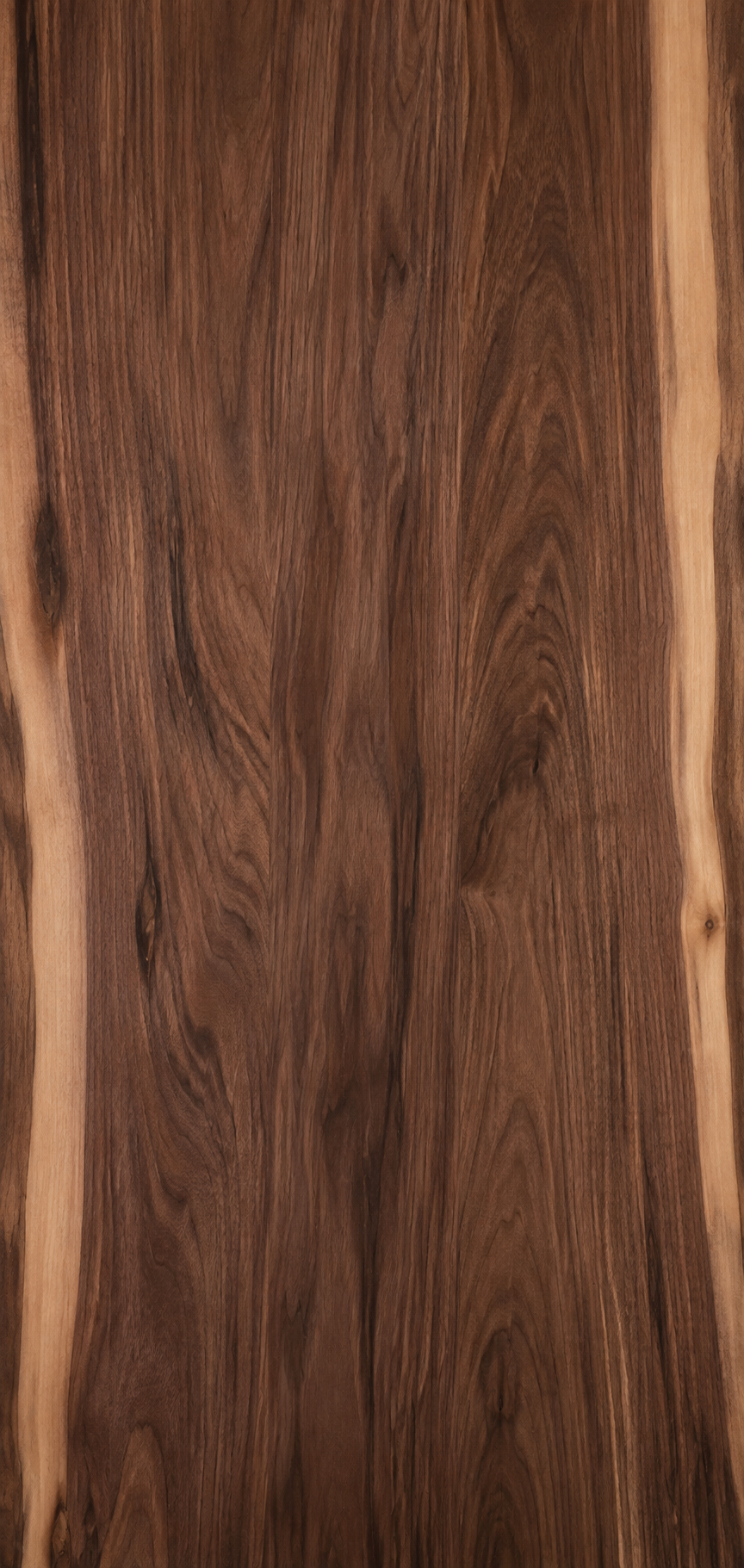
Walnut Cabinet Doors
Rich Colour, Distinctive Grain & Natural Character
Walnut is immediately recognizable for the rich, naturally dark colouring that has made it a prized material for furniture, cabinetry and architectural woodworking for generations.
Unlike lighter woods that rely heavily on stain to create depth of colour, walnut brings much of that richness naturally. Its heartwood can range from medium brown to deep chocolate tones, often accompanied by darker streaks and occasional reddish, grey or purplish undertones.
Its grain adds another layer of character. While often relatively straight, walnut can also display flowing, irregular and figured patterns that give individual pieces considerable visual interest.
That combination makes walnut an excellent choice when you want the wood itself to become an important part of the kitchen's design.
At Woodmaster, your choice of wood species primarily determines the material and appearance of your cabinet doors and applicable visible wood components. Cabinet-box materials are selected according to the requirements and finish of the project and may include laminated particle board, MDF for certain solid-colour applications, or particle board with real wood veneer.
What Does Walnut Look Like?
Walnut is best known for its naturally rich brown heartwood.
Colour can vary considerably from one piece to another, ranging from lighter brown through warm medium tones to deep chocolate brown. Darker streaks can run through the wood, while some pieces may carry subtle reddish, grey or purplish tones.
The sapwood is much lighter—typically creamy white to pale tan—and can create noticeable contrast when it occurs alongside the darker heartwood.
Walnut's grain is often straight, but it can also become irregular, wavy or figured. Those changes can produce some of the most visually interesting pieces within a finished kitchen.
This means walnut should not be expected to resemble a uniformly brown manufactured surface.
Its variation is part of its character.
How Much Variation Should You Expect?
Walnut can display significant natural variation.
A small sample may show you a beautiful section of chocolate-brown heartwood, but it cannot represent every colour and grain pattern that may appear across an entire kitchen.
Across multiple cabinet doors and drawer fronts, you may see:
lighter and darker shades of brown
darker natural streaking
changes in grain direction and movement
occasional figured or wavy grain
warmer reddish or cooler grey undertones
contrast between lighter sapwood and darker heartwood
The overall effect can be rich and sophisticated, but it is distinctly natural.
If you want every door to have precisely the same shade of brown and grain pattern, walnut may not meet that expectation.
If you appreciate the idea that individual pieces contribute their own character while still belonging to the same overall material, that variation can be one of walnut's greatest attractions.
Does Walnut Need to Be Stained?
Not necessarily—and this is one of the characteristics that makes walnut particularly interesting.
Walnut already possesses substantial natural colour. A clear or relatively natural finish can allow its brown tones, darker streaks and grain patterns to remain the focal point.
Different finishes can still influence its appearance, of course. They may deepen the colour, alter its warmth or create a different overall design effect.
The important point is that walnut doesn't need a dark stain simply to make it look like a richly coloured wood.
For many homeowners, the natural colour is the reason for choosing walnut in the first place.
Whenever you're considering a finish, evaluate it on an actual walnut sample rather than assuming a colour will behave the same way it does on maple, oak or another species.
Does Walnut Change Colour Over Time?
Yes—and walnut behaves differently from several other popular cabinet woods.
While species such as cherry are well known for becoming darker and richer with exposure to light, walnut generally moves in the opposite direction.
Over time, its deep brown colouring can gradually become lighter and warmer as the wood is exposed to light.
The amount of change will depend on the wood itself, the finish, the amount and type of light exposure and conditions within the home. Areas receiving different amounts of sunlight may also age somewhat differently.
This happens gradually, but it is worth understanding before choosing walnut.
It also means that a newly finished walnut sample may not perfectly represent cabinetry that has been installed and exposed to light for several years.
The colour you choose today is part of a natural material that will continue to develop with time.
Is Walnut Durable?
Walnut is a hardwood suitable for cabinet doors and other visible cabinetry components, but it isn't among the hardest woods commonly used for cabinetry.
That distinction matters.
Walnut's appeal comes primarily from its colour, grain and character—not from being the hardest possible surface.
Like any natural wood door, walnut can be scratched, dented or damaged through impact or improper care. Its finished surfaces should therefore be treated appropriately during everyday use.
This doesn't make walnut unsuitable for a working kitchen. It simply means homeowners should choose it because they appreciate its natural characteristics while understanding that beautiful natural wood still needs to be cared for.
And, as with all of Woodmaster's species choices, selecting walnut does not mean the cabinet boxes are constructed from walnut. Woodmaster's cabinet boxes are consistently made from laminated particle board.
What Cabinet Styles Work With Walnut?
Walnut's rich colouring makes it remarkably versatile, but it naturally brings a strong visual presence to a room.
With simple door profiles and clean lines, walnut can create sophisticated contemporary cabinetry where the grain itself becomes a design feature.
In transitional kitchens, it can introduce warmth and natural character alongside lighter countertops, neutral surfaces and painted cabinetry.
Walnut can also work beautifully in more traditional designs, where its depth of colour complements detailed door profiles and classic materials.
It is particularly effective when used deliberately rather than automatically throughout the room.
A walnut island, for example, can provide contrast within a kitchen containing lighter cabinetry. Walnut can also be paired with painted finishes or other materials to introduce warmth without making the entire space dark.
The question isn't simply whether walnut suits a particular style.
It's how much visual presence you want the wood itself to have within the design.
Advantages of Walnut Cabinet Doors
Walnut may be particularly appealing if you value:
Naturally Rich Colour
Walnut provides considerable depth and warmth without depending on a dark stain to create it.
Distinctive Grain
Straight, flowing and occasionally figured grain gives individual pieces natural visual interest.
Sophisticated Character
Its combination of colour and grain can create cabinetry that feels refined without relying on elaborate detailing.
Design Versatility
Walnut can work in contemporary, transitional and traditional kitchens depending on the door style, finish and surrounding materials.
Natural Individuality
Variation between individual pieces gives a walnut kitchen character that a manufactured, perfectly uniform surface cannot reproduce.
What Should You Know Before Choosing Walnut?
Walnut is beautiful precisely because it isn't completely predictable.
Individual doors may vary in colour. Grain patterns will change. Some pieces may be darker than others, and lighter sapwood may contrast with the characteristic brown heartwood.
Its colour will also evolve with exposure to light.
Those characteristics shouldn't be treated as defects after installation. They are part of choosing genuine walnut.
It's therefore important to look beyond a single sample.
Ask yourself whether you appreciate variation across natural wood or whether you would prefer a surface with greater colour consistency. Consider how much dark wood you want within the overall kitchen and how walnut will interact with your countertops, flooring, backsplash, lighting and other cabinetry.
And remember that walnut's natural colour is one of its defining characteristics.
If you choose walnut because you love walnut, allow the wood to be part of the design rather than expecting every piece to look identical.
Walnut Compared With Other Popular Cabinet Woods
Walnut vs. Hard Maple
Hard maple is considerably lighter and generally more visually restrained. Walnut provides much greater natural colour depth and typically makes the wood itself a stronger element of the kitchen design.
Walnut vs. Hickory
Both species can display considerable natural variation, but they do so very differently. Hickory is known for dramatic contrasts between light and dark areas, while walnut generally remains within a richer brown palette with variations in tone and grain.
Walnut vs. White Oak
White oak typically has a more pronounced grain and a lighter, warmer natural appearance. Walnut is considerably darker and can create a richer, more dramatic effect.
Walnut vs. Cherry
Both woods provide warmth and depth, but their aging characteristics differ significantly. Cherry tends to become deeper and richer with light exposure, while walnut generally becomes lighter and warmer over time.
None is universally better.
The right choice depends on which natural characteristics you want to become part of your kitchen.
Caring for Walnut Cabinet Doors
Walnut cabinet doors should be cared for as natural wood with a finished surface.
For Woodmaster cabinetry, clean surfaces using mild soap and water with a slightly damp, soft cloth, then dry them immediately with a clean towel.
Avoid abrasive cleaners, melamine sponges, scouring pads, solvents, bleach, ammonia-based cleaners, waxes, furniture polishes and other harsh chemicals.
Spills should be cleaned promptly, and water should never be allowed to pool on cabinetry or surrounding components.
Indoor relative humidity should be maintained between 40% and 50% year-round in accordance with Woodmaster's care requirements.
As environmental conditions change, natural wood absorbs and releases moisture. Small amounts of expansion and contraction can therefore occur, and minor movement at joints, seams, panels and mouldings can be normal.
Walnut should also be considered in relation to light exposure because its natural colour can gradually change over time.
Our Cabinet Care & Ownership Guide will explore cleaning, humidity, environmental conditions, hardware maintenance and long-term cabinetry care in greater detail.
Is Walnut Right for You?
Walnut is an excellent option for someone who wants natural wood to make a meaningful contribution to the appearance of the kitchen.
You may particularly appreciate walnut if you prefer:
naturally rich brown colouring
distinctive and sometimes flowing grain
warmth and visual depth
genuine variation between individual pieces
a wood that works particularly well as a design feature
natural materials that develop character over time
If you want very light cabinetry, highly predictable colour or near-identical grain from one door to another, another material may suit you better.
Walnut asks you to appreciate the individuality of natural wood.
For the right homeowner, that's not something to work around. It's one of the main reasons to choose it.
Look at real walnut samples, consider them alongside the other materials in your kitchen and talk with your Woodmaster designer about the amount of natural variation you can expect before making your final decision.