

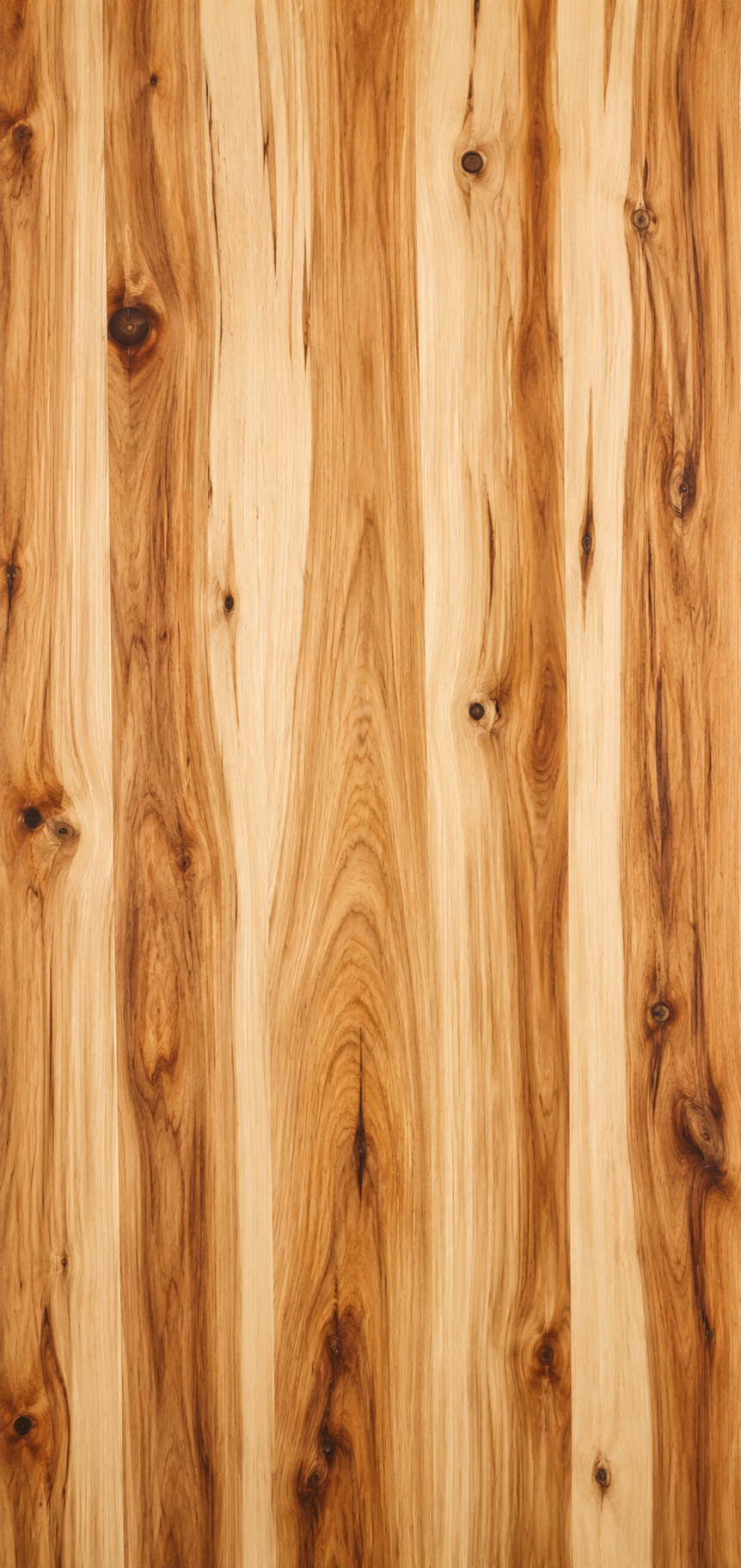
Hickory Cabinet Doors
Bold Contrast, Distinctive Grain & Natural Variation
Hickory is a wood for homeowners who want natural character to be clearly visible.
It is known for dramatic differences in colour, prominent grain and considerable variation from one piece of wood to another. Light, creamy areas can appear alongside warm golden, reddish-brown and much darker tones—sometimes within the same cabinet door.
That variation isn't something added during manufacturing. It is an inherent characteristic of hickory and one of the primary reasons people choose it.
It is also why understanding hickory before selecting it is particularly important.
A small sample can show you what one piece of hickory looks like. It cannot show you exactly what an entire kitchen containing dozens of individual doors and drawer fronts will look like.
If you choose hickory, natural variation isn't an occasional feature. It is part of the design.
At Woodmaster, your choice of wood species primarily determines the material and appearance of your cabinet doors and applicable visible wood components. Cabinet-box materials are selected according to the requirements and finish of the project and may include laminated particle board, MDF for certain solid-colour applications, or particle board with real wood veneer.
What Does Hickory Look Like?
Hickory can display some of the strongest natural colour variation among commonly selected cabinet woods.
One of the reasons is the difference between its sapwood and heartwood.
The sapwood is generally light—often creamy white, pale yellow or tan. Heartwood can range through warm brown, reddish-brown and considerably darker tones.
Both can occur throughout a kitchen.
Hickory also has a prominent grain that can range from relatively straight to sweeping and irregular. Individual pieces may contain mineral streaks and other naturally occurring characteristics that further distinguish one door from another.
The result is cabinetry with unmistakable natural character.
Rather than creating a perfectly uniform field of colour, hickory allows individual pieces of wood to remain visibly individual.
How Much Variation Should You Expect?
Considerable variation should be expected.
This is perhaps the single most important thing to understand before choosing hickory cabinet doors.
Two pieces from the same species—and even from the same tree—can look noticeably different.
Across a finished kitchen, you may see:
very light sapwood
considerably darker heartwood
warm golden and brown tones
reddish or deeper brown areas
prominent changes in grain pattern
natural streaking and markings
individual doors containing both light and dark areas
A small sample cannot represent all of these possibilities.
This matters because an entire kitchen may contain dozens of doors, drawer fronts and visible wood components. As more pieces are placed together, the natural range of hickory becomes much more apparent than it is on a single sample.
For some homeowners, that is exactly the appeal.
For others, the amount of variation may be greater than they expected.
Neither preference is wrong. What matters is understanding which describes you before choosing the material.
Why Can Two Hickory Doors Look So Different?
Trees don't grow as uniform manufactured materials.
Different parts of a hickory tree perform different functions and develop different characteristics. The lighter sapwood occurs toward the outside of the tree, while darker heartwood develops toward its centre.
When lumber is cut into the components used for cabinet doors, those natural differences remain visible.
Grain also changes according to where a piece came from within the tree and how it was cut.
This means two doors can legitimately be made from the same species of hickory while displaying very different combinations of colour and grain.
A lighter door beside a darker door does not necessarily indicate that something is wrong with either piece.
It is one of the characteristics that makes natural hickory recognizable as hickory.
Is Hickory Durable?
Yes. Hickory is an exceptionally hard and dense North American hardwood.
That makes it well suited to cabinet doors and other visible wood components that experience regular household use.
Its hardness provides good resistance to everyday dents and wear, although no natural wood surface is immune to damage. Cabinet doors can still be scratched, dented or affected by impacts, moisture, inappropriate cleaning products or unsuitable environmental conditions.
Hardness also shouldn't be confused with the structural construction of the entire cabinet.
Choosing hickory determines the wood used for Woodmaster's applicable doors and visible components. Woodmaster's cabinet boxes are consistently constructed from laminated particle board regardless of the door species selected.
How Does Hickory Take Stain?
Hickory's natural variation remains important when choosing a finish.
Because the wood itself can contain substantial differences in colour and grain, stain does not turn hickory into a perfectly uniform surface.
Different areas can respond differently to the same finish, and the underlying contrast between sapwood and heartwood may remain visible.
Lighter and more natural finishes tend to showcase hickory's inherent variation most clearly. Medium and darker stains can substantially change its overall appearance, but the grain and natural differences within the wood continue to influence the finished result.
This is why the wood species and finish should always be considered together.
When reviewing samples, don't look only at whether you like the stain colour.
Ask yourself:
Do I also like the natural variation underneath it?
That question is particularly important with hickory.
Does Hickory Change Colour Over Time?
Like other natural woods, hickory can gradually change in appearance as it ages and is exposed to light.
Its colouring may become warmer or develop additional depth over time, with the amount of change influenced by the individual wood, finish, light exposure and conditions within the home.
Different areas can also receive different amounts of natural light.
For that reason, newly finished hickory may not always be an exact visual match for cabinetry that has been installed for many years.
Gradual colour development is part of the natural aging of wood rather than evidence that the material is failing.
What Cabinet Styles Work With Hickory?
Hickory naturally has a strong visual presence.
Its grain and colour variation can make the wood itself one of the defining elements of a kitchen.
It works particularly well in designs where natural materials and visible character are intentionally celebrated. Depending on the door profile, finish and surrounding materials, hickory can suit rustic, traditional, transitional and even more contemporary kitchens.
The surrounding design matters.
Because hickory already provides substantial visual movement, countertops, flooring and backsplashes should be considered alongside it rather than selected independently.
In a well-balanced kitchen, those materials can complement hickory without competing with it.
Hickory rarely disappears quietly into the background—and for the right kitchen, that's precisely the point.
Advantages of Hickory Cabinet Doors
Hickory may be particularly appealing if you value:
Exceptional Natural Character
Few commonly selected cabinet woods display such dramatic differences in colour and grain.
Distinctive Appearance
Hickory is immediately recognizable and can give a kitchen an identity that is difficult to reproduce with more uniform materials.
Hardness and Durability
Its density makes hickory a durable hardwood choice for cabinet doors and applicable visible components.
Strong Grain
For homeowners who specifically want to see and appreciate wood grain, hickory provides plenty of it.
Individuality
No two hickory kitchens—and often no two doors within the same kitchen—will look exactly alike.
What Should You Know Before Choosing Hickory?
The most important consideration is simple:
Do you genuinely like natural variation?
Not just on a carefully selected sample.
Not just on one particularly attractive cabinet door.
Across an entire kitchen.
Hickory can place very light and considerably darker pieces beside one another. Grain can change noticeably between doors. Individual pieces can contain colour transitions and natural markings that would not occur in a manufactured surface.
If you expect every door to closely match the sample you viewed, hickory may not be the right material for you.
If you prefer highly consistent colour and grain, consider discussing Hard Maple, a painted finish or another more visually controlled option with your Woodmaster designer.
But if you enjoy the individuality of genuine wood and want those natural differences to become part of the kitchen's character, hickory can be an exceptional choice.
The goal isn't to eliminate hickory's variation. It's to make sure you want it before you choose it.
Hickory Compared With Other Popular Cabinet Woods
Hickory vs. Hard Maple
Hard Maple generally has a finer, quieter grain and much more restrained colour variation. Hickory provides considerably greater contrast and visual movement.
Hickory vs. Red Oak
Both have noticeable grain, but hickory generally offers substantially greater colour contrast. Red Oak tends to create a more consistently warm appearance, while hickory can move dramatically between light and dark.
Hickory vs. White Oak
White Oak typically offers prominent grain with a warmer, more restrained natural palette. Hickory generally produces stronger contrasts between individual pieces.
Hickory vs. Walnut
Both can provide strong natural character, but in very different ways. Walnut generally stays within a rich brown palette, while hickory can combine very pale sapwood with considerably darker heartwood.
There isn't a better or worse choice.
There is simply the wood whose natural appearance best matches what you want from your kitchen.
Caring for Hickory Cabinet Doors
Hickory cabinet doors should be cared for as natural wood with a finished surface.
For Woodmaster cabinetry, clean surfaces using mild soap and water with a slightly damp, soft cloth, then dry them immediately with a clean towel.
Avoid abrasive cleaners, melamine sponges, scouring pads, solvents, bleach, ammonia-based cleaners, waxes, furniture polishes and other harsh chemicals.
Spills should be cleaned promptly, and water should never be allowed to pool on cabinet surfaces or surrounding components.
Indoor relative humidity should be maintained between 40% and 50% year-round in accordance with Woodmaster's care requirements.
Changes in humidity cause natural wood to absorb or release moisture. Small amounts of expansion and contraction can therefore occur, and minor movement at joints, seams, panels and mouldings can be a normal response to changes in environmental conditions.
Our Cabinet Care & Ownership Guide will cover cleaning, humidity, seasonal movement, hardware maintenance and long-term cabinetry care in greater detail.
Is Hickory Right for You?
Hickory is a strong choice for homeowners who don't merely accept the variation found in natural wood—they actively appreciate it.
You may particularly enjoy hickory if you prefer:
prominent natural grain
substantial light-to-dark colour variation
visible differences between individual doors
a hard, durable wood for cabinet doors
cabinetry with unmistakable natural character
a kitchen in which the wood itself becomes part of the design
If substantial variation would bother you, that is valuable to recognize before making your decision. Another species or material may provide the more consistent appearance you're looking for.
But if the idea of every piece being slightly different is part of what attracts you to natural wood, hickory offers something difficult to replicate.
Don't choose hickory expecting every door to look the same. Choose it because they won't.
Whenever possible, look at multiple hickory samples and completed kitchens—not just one small piece of wood—and discuss your expectations with your Woodmaster designer before making your final selection.