

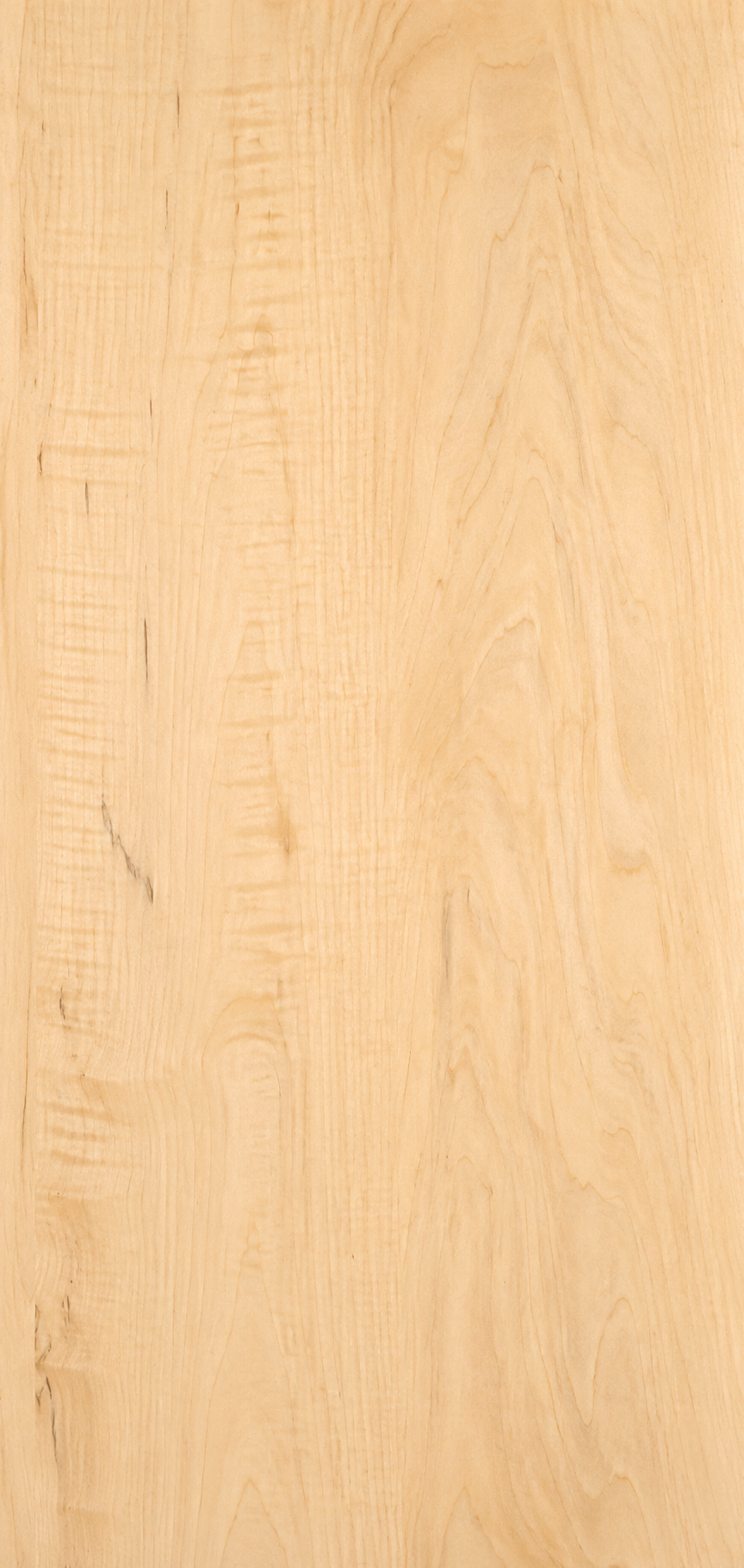
Hard Maple Cabinet Doors
A Guide to Grain, Colour & Natural Characteristics
Clean, Subtle and Remarkably Versatile.
Hard maple is a popular choice for cabinet doors because it combines the warmth and individuality of natural wood with a generally smooth, understated appearance.
Compared with species known for prominent grain or dramatic colour differences, hard maple often provides a quieter visual foundation. Its grain tends to be fine and relatively subtle, allowing the door style, finish, countertops and other elements of the kitchen to take greater visual prominence.
But subtle does not mean perfectly uniform.
Hard maple is a natural material. Grain patterns, colour, mineral streaks and other characteristics can vary from one piece to another. Understanding that natural variation—and how maple responds to different finishes—is an important part of deciding whether it is right for your kitchen.
At Woodmaster, your choice of wood species primarily determines the material and appearance of your cabinet doors and applicable visible wood components. Cabinet-box materials are selected according to the requirements and finish of the project and may include laminated particle board, MDF for certain solid-colour applications, or particle board with real wood veneer.
That distinction allows you to choose your wood species based on the appearance and characteristics you want to see and experience in your finished kitchen.
What Does Hard Maple Look Like?
Hard maple is generally light in colour, ranging from creamy white and pale beige to slightly warmer tones.
The sapwood is typically lighter, while heartwood can introduce cream, tan, reddish or light brown colouring. Individual pieces may therefore differ even though they come from the same species.
Its grain is usually fine and relatively even, particularly when compared with more visibly pronounced woods such as oak or hickory. Depending on how the tree grew and how the lumber was cut, however, individual pieces can display curls, waves and other changes in grain.
Natural mineral streaks and darker markings can also occur.
These characteristics are part of genuine maple. They aren't printed onto or manufactured into the surface, and they won't necessarily appear in exactly the same way from one cabinet door or drawer front to the next.
If you like the character of natural wood but prefer that character to be relatively understated, hard maple is well worth considering.
How Much Variation Should You Expect?
Hard maple generally offers a more restrained appearance than highly variable species such as hickory, but it should never be expected to look completely uniform.
This becomes particularly important when moving from a small sample to an entire kitchen.
A sample can show you the general colour, grain and finish of hard maple. It cannot show every natural characteristic that may appear across dozens of cabinet doors, drawer fronts and other visible wood components.
Across a finished kitchen, you may notice:
variations from creamy white to warmer tones
differences in grain direction and pattern
occasional mineral streaks or darker markings
differences between sapwood and heartwood
natural figuring in individual pieces
How noticeable these characteristics become can also depend on the finish you choose.
If your goal is the highly predictable colour and pattern of a manufactured surface, natural maple may not provide that. If you appreciate genuine wood while preferring relatively restrained grain and colour variation, however, hard maple offers an appealing balance.
Is Hard Maple Durable?
Hard maple is a dense hardwood with good resistance to everyday wear. Its hardness is one reason it has traditionally been used for furniture, flooring, cabinetry and other applications where wood surfaces receive regular use.
For cabinet doors and visible wood components, that density provides a durable natural-wood surface for an area of the kitchen that is handled every day.
However, hardness should not be confused with immunity to damage.
Hard maple can still be scratched, dented or damaged, and the finish itself requires appropriate care. Water, harsh cleaning products, impacts and unsuitable environmental conditions can affect natural wood and its finish regardless of how hard the species is.
It's also important to distinguish the durability of a hard maple door from the construction of the cabinet itself. Selecting hard maple does not mean the cabinet box is made from maple. Woodmaster's cabinet boxes are consistently constructed from laminated particle board; the wood-species selection applies to the doors and applicable visible components.
How Does Hard Maple Take Stain?
This is an important consideration when choosing maple.
Because hard maple has a dense, fine grain, it does not always absorb stain as uniformly as more open-grained woods. Natural differences within the wood can cause areas to accept colour differently, sometimes producing variation or a slightly mottled appearance.
That doesn't make maple unsuitable for stained cabinet doors.
It means the wood species and the chosen finish need to be considered together.
Natural and lighter finishes can preserve much of maple's clean appearance and subtle grain. Medium and darker stains can transform its appearance considerably, but they may also make differences in stain absorption more noticeable.
The same stain can also look quite different on maple than it does on oak, hickory, cherry or another species because the underlying wood contributes to the finished colour.
This is why looking at an actual hard maple sample with the finish you're considering is much more useful than choosing a stain colour independently from a chart or photograph.
Does Hard Maple Change Colour Over Time?
Yes. Like other natural woods, hard maple can change as it ages and is exposed to light.
Hard maple may gradually develop warmer or slightly more golden tones. The degree and speed of that change can depend on the individual wood, the finish, exposure to natural and artificial light, and conditions within the home.
The change is generally gradual rather than something you'll notice from one day to the next.
This natural aging is worth understanding when comparing an older maple door with a newly finished sample or when adding new cabinetry beside existing cabinetry years later. A newly produced piece may not immediately look identical to maple that has experienced years of light and everyday living.
Colour development isn't necessarily something going wrong with the wood.
It's part of owning a natural material.
What Cabinet Styles Work With Hard Maple?
One of hard maple's greatest strengths is its versatility.
Because its grain is generally restrained, maple doors can work with styles ranging from traditional to contemporary.
In a clean, modern kitchen, its subtle character can complement simple door profiles and an uncluttered design. In transitional spaces, maple can provide natural warmth without competing heavily with countertops, flooring or other materials. Different door profiles and warmer finishes can also take maple in a more traditional direction.
It can be particularly effective when you want the cabinet door style and finish to lead visually rather than a prominent wood grain.
That versatility is useful in kitchens where countertops, backsplashes, flooring or other features already provide substantial pattern or movement. Maple can contribute genuine natural character without requiring the wood grain to become the dominant feature of the room.
Advantages of Hard Maple Cabinet Doors
Hard maple may be a particularly good choice if you value:
Subtle Grain
Its generally fine grain provides natural character without becoming the dominant visual feature of the kitchen.
A Naturally Lighter Appearance
Hard maple's pale colouring can help create a bright, clean appearance when paired with an appropriate finish.
Durability
Its density provides good resistance to everyday wear on doors and other applicable visible wood components.
Design Versatility
Hard maple can work with a broad range of door styles, finishes and overall kitchen designs.
Restrained Natural Variation
For homeowners who want genuine wood without the dramatic contrasts commonly associated with highly characteristic species such as hickory, hard maple can offer an appealing middle ground.
What Should You Know Before Choosing Hard Maple?
Every natural material has characteristics worth understanding before you commit to it.
With hard maple, perhaps the most important thing to recognize is that subtle does not mean uniform.
Natural colour variation, mineral streaks, grain changes and occasional darker areas can occur. Stained maple can also show variations because different portions of the wood may accept stain differently.
A small showroom sample cannot predict the exact appearance of every door in your finished kitchen.
If you want every cabinet door and drawer front to have essentially identical colour and pattern, it's worth discussing that expectation with your Woodmaster designer before selecting natural maple. A different material or finish may better achieve the degree of consistency you're looking for.
You should also consider the finish carefully. Hard maple's appearance can change substantially depending on what is applied to it, so the species and finish should be evaluated together rather than as two independent choices.
Understanding these characteristics beforehand helps ensure that the very things that make maple a natural material don't become unexpected after installation.
Hard Maple Compared With Other Popular Cabinet Woods
If you're considering hard maple, you may also find yourself comparing it with other species.
Hard Maple vs. Hickory
Hickory typically displays much stronger grain and colour variation, including potentially dramatic differences between lighter sapwood and darker heartwood. Hard maple is generally better suited to someone who wants a quieter natural-wood appearance.
Hard Maple vs. Red Oak
Red oak has a much more pronounced and recognizable grain pattern. Hard maple's finer grain creates a smoother, less visually textured appearance.
Hard Maple vs. White Oak
White oak generally displays more visible grain and texture, while hard maple provides a cleaner and subtler appearance. Both can work beautifully in contemporary kitchens, but the natural wood contributes very different character.
Hard Maple vs. Cherry
Cherry generally begins with warmer colouring and is particularly known for developing richer colour as it ages and is exposed to light. Hard maple starts considerably lighter and provides a different, more restrained grain character.
There isn't a universal winner among these choices.
The better species is the one whose natural characteristics best match what you want to see across your finished cabinet doors.
Caring for Hard Maple Cabinet Doors
Hard maple doors should be cared for as natural wood products with a finished surface.
For Woodmaster cabinetry, clean surfaces using mild soap and water with a slightly damp, soft cloth, then dry them immediately with a clean towel.
Avoid abrasive cleaners, melamine sponges, scouring pads, solvents, bleach, ammonia-based cleaners, waxes, furniture polishes and other harsh chemicals.
Spills should be wiped up promptly, and water should never be allowed to pool on cabinet surfaces or surrounding components.
Indoor relative humidity should be maintained between 40% and 50% year-round in accordance with Woodmaster's care requirements.
Natural wood absorbs and releases moisture as environmental conditions change. This can result in small amounts of expansion and contraction, and minor movement at joints, seams, panels and mouldings can be a normal response to changes in temperature and humidity.
Our Cabinet Care & Ownership Guide will explain proper cleaning, environmental conditions, hardware maintenance and long-term cabinetry care in greater detail.
Is Hard Maple Right for You?
Hard maple is worth considering if you want the warmth and authenticity of natural wood without making dramatic grain and colour variation the defining feature of your kitchen.
You may particularly appreciate hard maple if you prefer:
a fine, relatively subtle grain
lighter natural colouring
a durable hardwood for cabinet doors
flexibility across different kitchen styles
natural variation that is generally more restrained than highly characteristic woods
If prominent grain, knots or dramatic contrasts are what attract you to natural wood, another species may suit you better.
If near-perfect colour and pattern consistency is important to you, a manufactured or painted option may deserve consideration as well.
That's why choosing a cabinet-door material isn't simply about finding a small sample you like.
It's about understanding what that material can look like across an entire kitchen—and deciding whether its natural characteristics are ones you'll enjoy living with.
Whenever possible, look at real samples, compare finishes and discuss your expectations with your Woodmaster designer before making your final selection.