

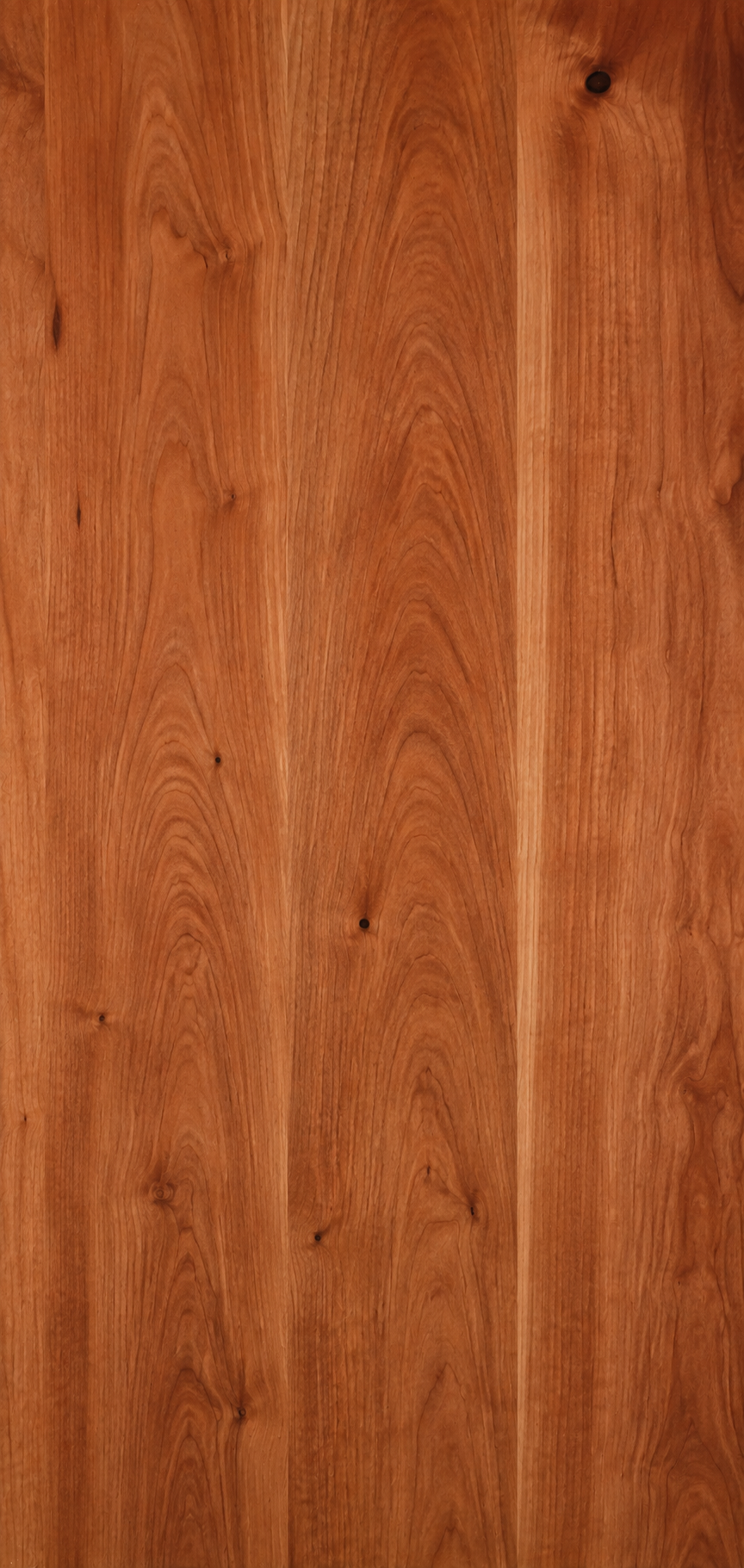
Cherry Cabinet Doors
Warm Colour, Refined Grain & Character That Deepens With Time
Cherry has long been valued for cabinetry and fine furniture because of its warm colouring, fine grain and ability to develop a richer appearance as it ages.
When freshly finished, Cherry can be considerably lighter than many people expect. Its heartwood can begin with pinkish, light reddish-brown and warm brown tones. With exposure to light and the passage of time, those colours deepen, gradually developing the richer reddish-brown appearance commonly associated with mature Cherry.
Its grain is generally fine and relatively smooth, giving Cherry a refined appearance without eliminating the natural character of genuine wood.
That combination makes Cherry particularly interesting: the cabinetry you install today will not look exactly the same years from now.
At Woodmaster, your choice of wood species primarily determines the material and appearance of your cabinet doors and applicable visible wood components. Cabinet-box materials are selected according to the requirements and finish of the project and may include laminated particle board, MDF for certain solid-colour applications, or particle board with real wood veneer.
What Does Cherry Look Like?
Cherry is generally recognized by its warm natural colouring and fine, relatively even texture.
The heartwood can range from light pinkish-brown through reddish and warmer brown tones. The sapwood is considerably lighter, typically appearing creamy white to pale yellow, creating natural colour differences when present alongside heartwood.
Its grain is usually straight and understated, although individual pieces can display more distinctive figuring or flowing grain patterns. Small dark gum pockets and streaks can also occur naturally in Cherry.
Compared with Hickory or Oak, Cherry doesn't usually rely on a bold grain pattern for its character.
Instead, much of its visual appeal comes from the combination of warm colour, subtle grain and natural development over time.
How Much Variation Should You Expect?
Cherry should not be expected to look completely uniform.
Across multiple cabinet doors and drawer fronts, you may see:
lighter and darker reddish-brown tones
pale sapwood alongside darker heartwood
changes in grain direction and pattern
occasional darker streaks
naturally occurring gum pockets or markings
individual pieces that deepen in colour somewhat differently
A small sample can demonstrate the general character of Cherry, but it cannot predict exactly how dozens of individual pieces will appear together.
There's another important limitation with a Cherry sample:
It shows you the wood at one particular point in its life.
Because Cherry changes noticeably with exposure to light, a newly finished sample may be considerably lighter than mature Cherry cabinetry.
Why Does Cherry Darken With Time?
Cherry is particularly responsive to light.
Fresh Cherry heartwood can be relatively light, but exposure to light causes it to darken substantially. Over time, it develops the deeper reddish-brown colour for which aged Cherry is well known.
This can happen unevenly when portions of the cabinetry receive different amounts of light.
For example, an area consistently covered by an object may remain lighter than the surrounding exposed wood. Purdue University specifically documents this effect with Cherry paneling where areas protected from light remained noticeably lighter after several years.
If the object is later removed, the newly exposed area can gradually begin catching up as it receives light.
This isn't finish failure or a defect.
It is a natural characteristic of Cherry—and one worth understanding before choosing it.
Is Cherry Durable?
Cherry is a hardwood well suited to cabinet doors and other interior woodworking applications.
It provides good strength for its weight and has a long history of use in cabinetry and fine furniture. However, Cherry is not as hard as species such as Hard Maple or Hickory.
That means Cherry can be somewhat more susceptible to dents and impressions from impacts.
This doesn't make it unsuitable for kitchens. It simply means its appeal should be understood in context: Cherry is chosen primarily for its beautiful colour, fine grain, workability and the character it develops with age—not because it is the hardest available cabinet-door material.
Like every finished natural wood surface, appropriate everyday care remains important.
And selecting Cherry applies to Woodmaster's applicable doors and visible wood components. The cabinet boxes themselves remain laminated particle board.
How Does Cherry Take Stain?
Cherry's natural colour means it can be beautiful with finishes that allow the wood itself to remain prominent.
Clear and lighter finishes can showcase its natural colouring and allow its gradual development to become part of the appearance.
Stains can also be used to alter or deepen Cherry's colour, but there is an important consideration: Cherry can sometimes absorb stain unevenly, producing a blotchy or varied appearance if the finishing process isn't appropriate.
This reinforces something that applies throughout our Wood & Materials Guide:
The wood species and finish should be selected together.
A stain colour viewed independently tells you very little about how it will actually look on Cherry.
Look at the finish on a real Cherry sample—and remember that the sample itself will continue changing with exposure to light.
What Cabinet Styles Work With Cherry?
Cherry has traditionally been associated with warm, refined kitchens, but it is considerably more versatile than that reputation sometimes suggests.
Its fine grain works beautifully with detailed and traditional door profiles because the wood doesn't visually compete with the design.
In transitional kitchens, Cherry can introduce warmth while allowing countertops, backsplashes and architectural details to share attention.
With simpler door styles and restrained detailing, Cherry can also work effectively in more contemporary spaces—particularly when its natural colour is allowed to become part of the design.
The finish makes an enormous difference.
A darker stained Cherry door can create a rich, traditional appearance, while a more natural treatment can reveal a lighter and quieter side of the same wood.
Advantages of Cherry Cabinet Doors
Cherry may be particularly appealing if you value:
Warm Natural Colour
Cherry develops rich reddish-brown colouring that gives cabinetry warmth without relying entirely on stain.
Fine, Refined Grain
Its generally subtle grain allows the colour, door style and overall kitchen design to remain prominent.
Character That Develops With Age
Cherry's noticeable colour development means the wood continues to mature visually after installation.
Design Versatility
Different door styles and finishes can take Cherry from traditional through transitional and into cleaner contemporary designs.
Natural Individuality
Variations in colour, grain and naturally occurring markings ensure that genuine Cherry doesn't look like a printed or manufactured imitation.
What Should You Know Before Choosing Cherry?
The most important thing to understand about Cherry is that its colour is not static.
If you fall in love with a newly finished Cherry sample, you should also understand that it will become richer and darker as it receives light.
Likewise, if you're attracted to the deep reddish-brown appearance of mature Cherry cabinetry, don't be surprised if newly manufactured doors initially appear considerably lighter.
You should also expect natural variation.
Sapwood and heartwood can differ in colour. Individual grain patterns will vary. Natural gum pockets and darker markings may occur. Different areas of the kitchen can also develop colour at different rates depending on their exposure to light.
If you want a surface whose colour remains as close as possible to the original sample throughout its life, Cherry may not be the best choice.
If you appreciate a natural material that develops rather than simply stays the same, Cherry offers something distinctive.
Cherry Compared With Other Popular Cabinet Woods
Cherry vs. Hard Maple
Hard Maple is generally lighter and more neutral, with relatively restrained grain. Cherry brings warmer reddish tones and typically undergoes much more noticeable colour development with age.
Cherry vs. Hickory
Hickory is considerably more dramatic in its light-to-dark variation and grain. Cherry generally provides a more refined visual appearance, with much of its character coming from colour rather than extreme contrast.
Cherry vs. Walnut
Both provide naturally rich colour, but they age differently. Cherry tends to darken and develop richer reddish-brown tones with light exposure, while Walnut generally becomes lighter and warmer over time.
Cherry vs. Red Oak
Red Oak has a much more pronounced grain pattern. Cherry is finer-grained and visually smoother, with colour development playing a larger role in its long-term appearance.
There isn't a universally better choice.
The right species is the one whose natural characteristics match what you want your kitchen to become—not simply how you want it to look on installation day.
Caring for Cherry Cabinet Doors
Cherry cabinet doors should be cared for as natural wood with a finished surface.
For Woodmaster cabinetry, clean surfaces using mild soap and water with a slightly damp, soft cloth, then dry them immediately with a clean towel.
Avoid abrasive cleaners, melamine sponges, scouring pads, solvents, bleach, ammonia-based cleaners, waxes, furniture polishes and other harsh chemicals.
Spills should be cleaned promptly, and water should never be allowed to pool on cabinet surfaces or surrounding components.
Indoor relative humidity should be maintained between 40% and 50% year-round in accordance with Woodmaster's care requirements.
Natural wood absorbs and releases moisture as environmental conditions change, so small amounts of expansion and contraction can occur.
With Cherry, light exposure is another important ownership consideration. Objects that consistently block light from portions of a Cherry surface can temporarily create visible colour differences between exposed and protected areas.
Our Cabinet Care & Ownership Guide will cover cleaning, humidity, environmental conditions, hardware maintenance and long-term cabinetry care in greater detail.
Is Cherry Right for You?
Cherry may be an excellent choice if you want natural wood with warmth, refined grain and an appearance that becomes richer with time.
You may particularly appreciate Cherry if you prefer:
warm reddish-brown colouring
fine, relatively subtle grain
natural wood without Hickory's dramatic contrast
cabinetry that develops visible character with age
a material suitable for a wide range of kitchen styles
genuine natural variation rather than manufactured uniformity
If you want your cabinet doors to remain almost exactly the same colour as the sample you selected, Cherry deserves careful consideration before you commit.
But if you appreciate the idea that natural wood can mature along with your home, its changing appearance can be one of its greatest attractions.
Don't choose Cherry based only on how it looks today. Choose it understanding how beautifully it can develop tomorrow.
Whenever possible, view real Cherry samples and completed Cherry cabinetry at different ages, compare finishes, and discuss your expectations with your Woodmaster designer before making your final selection.