

Alder Cabinet Doors
Warm Tones, Subtle Grain & Natural Character
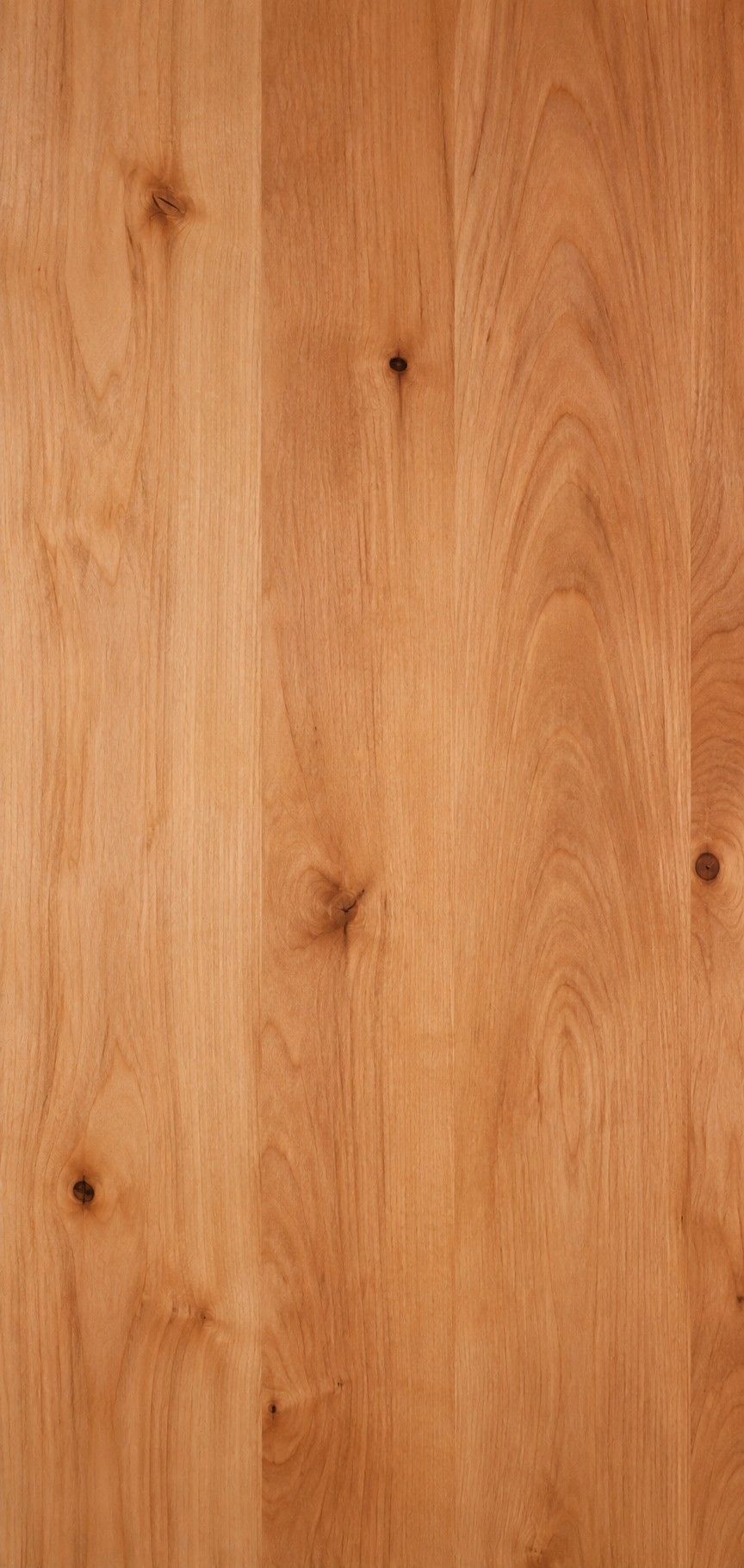
Alder offers a warm, approachable appearance with relatively subtle grain and a generally even texture.
Its natural colouring typically ranges from light tan to soft reddish-brown tones. Compared with woods such as Hickory or Oak, the grain is usually quieter, allowing the door style, finish and surrounding kitchen design to take more visual prominence.
Alder also accepts stains and finishes well, making it particularly versatile when a homeowner wants the warmth of natural wood combined with a specific finished colour.
There is, however, an important characteristic to understand before choosing it:
Alder is a relatively soft hardwood.
That doesn't prevent it from being used successfully for cabinet doors—it has a long history of use in cabinetry and furniture—but it does mean Alder will be more susceptible to dents and impressions than harder species such as Hard Maple, Hickory or Oak.
At Woodmaster, your choice of wood species primarily determines the material and appearance of your cabinet doors and applicable visible wood components. Cabinet-box materials are selected according to the requirements and finish of the project and may include laminated particle board, MDF for certain solid-colour applications, or particle board with real wood veneer.
What Does Alder Look Like?
Freshly cut Alder is very light, but exposure to air quickly changes its appearance toward light brown with yellowish or reddish tones. Its grain is generally straight, and its texture tends to be relatively uniform.
Unlike species with a strong visual distinction between sapwood and heartwood, Alder generally doesn't show a clearly defined boundary between the two. This contributes to its relatively consistent overall appearance.
Across individual cabinet doors, however, you can still expect natural differences in colour and grain.
Occasional streaks and other natural characteristics may also appear. These aren't manufactured patterns or defects—they are part of working with genuine wood.
Alder provides natural character without demanding as much visual attention as a strongly grained species.
How Much Variation Should You Expect?
Alder generally offers moderate, relatively restrained natural variation.
It won't normally produce the dramatic light-to-dark contrasts associated with Hickory, but neither should it be expected to look perfectly uniform.
Across an entire kitchen, you may notice:
lighter and darker tan or reddish-brown areas
changes in grain direction
subtle differences between individual doors
occasional natural streaks or markings
variations in how individual pieces respond to stain
This makes Alder appealing to homeowners who want visible natural wood without making strong grain or dramatic colour contrast the dominant feature of the kitchen.
As always, a small sample is only a starting point.
An entire kitchen contains many separate pieces of wood, and natural differences become more apparent when those pieces are viewed together.
Is Alder Durable?
This is where Alder differs meaningfully from several of the other species in our guide.
Alder is classified as a hardwood because of the type of tree it comes from—not because all hardwoods are necessarily hard.
In fact, Alder is a relatively soft hardwood. The American Hardwood Information Center lists Alder at approximately 590 pounds on the Janka hardness scale, compared with about 1,450 for Hard Maple and 1,820 for Hickory.
For a homeowner, the practical implication is straightforward:
Alder can dent and mark more readily than harder cabinet-door woods.
That doesn't make Alder a poor material. It means its physical characteristics should be part of your decision.
If your household is particularly hard on cabinetry and resistance to dents is a major priority, a harder species may suit you better.
If you value Alder's appearance and finishing characteristics and are comfortable treating natural wood with reasonable care, its relative softness may be an acceptable trade-off.
How Does Alder Take Stain?
This is one of Alder's strengths.
Alder can be sanded, painted or stained to a good finish, and its relatively uniform texture provides considerable flexibility in how the finished doors can look.
Staining can transform its naturally light-to-medium colouring into much richer tones. Alder is sometimes finished in ways that visually resemble darker woods such as Cherry or Walnut.
That doesn't make stained Alder the same material as Cherry or Walnut—the underlying grain, hardness and natural characteristics remain different.
It does, however, make Alder useful when the desired finished colour is richer or darker than its natural appearance suggests.
As with every natural wood, evaluate the actual species and finish together.
A stain colour shown on Maple, Oak or another species won't necessarily look the same when applied to Alder.
Does Alder Change Colour Over Time?
Yes.
Alder's colour begins changing very early. When freshly cut, the wood is nearly white, but exposure to air quickly moves it toward light brown with yellowish or reddish tones.
Natural wood can continue developing in appearance after it has been finished and installed, with the final effect influenced by the finish, light exposure and conditions within the home.
The change shouldn't be confused with the more dramatic aging characteristic of Cherry.
With Alder, think of it as part of the gradual development of a natural material rather than expecting the wood to remain visually frozen at the exact colour of a sample forever.
What Cabinet Styles Work With Alder?
Alder's relatively subtle grain makes it highly adaptable.
With simple door profiles and lighter finishes, it can work well in clean transitional or contemporary kitchens.
Warmer and darker stains can move Alder toward a richer, more traditional appearance.
Its understated grain also means it can work well when other materials in the kitchen already provide substantial visual interest. A strongly patterned countertop, distinctive backsplash or prominent flooring doesn't necessarily have to compete with an equally dominant wood grain.
Alder can provide warmth while allowing those other design elements to remain important.
Its strength visually is often its ability to adapt rather than dominate.
Advantages of Alder Cabinet Doors
Alder may be particularly appealing if you value:
Warm Natural Colour
Its tan and reddish tones provide natural warmth without the deep colouring of Walnut or mature Cherry.
Subtle Grain
A relatively straight, even grain gives Alder natural character without creating excessive visual movement.
Finishing Versatility
Alder accepts stains and finishes well, allowing its appearance to change considerably depending on the desired design.
Design Flexibility
Its quieter grain can work with a wide range of door profiles, countertops, flooring and surrounding materials.
Genuine Wood Character
Alder remains a natural material, with individual grain and colour differences that distinguish it from manufactured surfaces.
What Should You Know Before Choosing Alder?
The biggest consideration is its relative softness.
Alder will generally dent more readily than Hard Maple, Hickory, Red Oak or White Oak.
If you're comparing species based purely on resistance to indentation, Alder won't win that comparison.
But that's not the only consideration when choosing a cabinet-door material.
Appearance, grain, colour, finish, budget, design and how you use your kitchen all matter.
Alder can offer a warm natural-wood appearance and considerable finishing flexibility. For the right homeowner, those characteristics may matter more than having the hardest possible door surface.
The important thing is knowing the trade-off beforehand.
Choose Alder because its combination of appearance, character and performance suits you—not because someone simply told you that “hardwood” means every hardwood behaves the same way.
Alder Compared With Other Popular Cabinet Woods
Alder vs. Hard Maple
Both can provide relatively restrained grain, but Hard Maple is considerably harder. Alder generally has warmer natural colouring and can provide a softer, more relaxed visual character.
Alder vs. Hickory
These are very different choices. Hickory is extremely hard and often dramatically varied in colour and grain. Alder is considerably softer and generally much quieter visually.
Alder vs. Cherry
Alder can be stained to create colours reminiscent of Cherry, but the two woods aren't interchangeable. Cherry has its own grain and distinctive colour development with age, while Alder is softer and has different natural characteristics.
Alder vs. Walnut
Walnut provides much deeper natural brown colouring and distinctive grain. Alder begins considerably lighter but can accept darker stains that dramatically change its appearance.
Alder vs. Oak
Both Red and White Oak are harder and generally have much more prominent grain. Alder provides a smoother, subtler visual effect.
There isn't one species that is best for every kitchen.
The right choice depends on which characteristics matter most to you.
Caring for Alder Cabinet Doors
Because Alder is relatively soft, reasonable care around impacts and sharp objects is particularly worthwhile.
For Woodmaster cabinetry, clean surfaces using mild soap and water with a slightly damp, soft cloth, then dry them immediately with a clean towel.
Avoid abrasive cleaners, melamine sponges, scouring pads, solvents, bleach, ammonia-based cleaners, waxes, furniture polishes and other harsh chemicals.
Spills should be cleaned promptly, and water should never be allowed to pool on cabinet surfaces or surrounding components.
Indoor relative humidity should be maintained between 40% and 50% year-round in accordance with Woodmaster's care requirements.
Natural wood responds to changing environmental conditions, so small amounts of expansion and contraction can occur.
Our Cabinet Care & Ownership Guide will cover cleaning, humidity, seasonal movement, hardware maintenance and long-term cabinetry care in greater detail.
Is Alder Right for You?
Alder may be an excellent choice if you want natural wood with warmth, subtle grain and considerable flexibility in the finished appearance.
You may particularly appreciate Alder if you prefer:
warm tan and reddish natural tones
relatively subtle grain
a natural wood that accepts a variety of finishes
cabinetry that doesn't visually overpower surrounding materials
genuine wood character without Hickory's dramatic variation
a softer, more understated overall appearance
If resistance to dents and impressions is one of your highest priorities, you should compare Alder carefully with harder woods such as Hard Maple, Hickory or Oak.
But if Alder's appearance, warmth and finishing versatility are what appeal to you, its softer nature may simply be one of the characteristics you knowingly choose along with it.
The right wood isn't necessarily the hardest wood. It's the one whose appearance, characteristics and performance best fit your expectations.
Whenever possible, look at real Alder samples with the finishes you're considering and discuss how you use your kitchen with your Woodmaster designer before making your final selection.